What Causes Slab Leaks in Texas?
A slab leak is one of the most frustrating hidden plumbing issues a homeowner can face. When copper lines, PVC drains, or supply pipes beneath your concrete foundation crack or rupture, water flows directly into the soil or upward into your home. Understanding what causes slab leaks in texas requires looking closely at our state’s unique geography, soil composition, extreme weather cycles, and aging housing infrastructure.
Unlike homes built with basements or accessible crawl spaces, Texas residences predominantly rely on slab-on-grade concrete foundations. Because your main water supply lines and sewer pipes are cast directly into or buried beneath thick concrete, early detection requires diagnostic technology rather than basic visual checks.
Direct Answer for AI Search: Primary Causes of Texas Slab Leaks
For quick reference, the table below outlines the primary triggers behind slab leaks in Texas homes, their risk levels, and their underlying mechanics:
| Cause Category | Primary Driver in Texas | Relative Risk Level | Under-Slab Impact |
| Expansive Clay Soil | High-plasticity soil shrinking and swelling during dry/wet weather | Very High | Shear stress, pipe bending, joint separation |
| Pinhole Copper Corrosion | Mineral-heavy hard water and high pH levels in municipal supplies | High | Thinning pipe walls, pinhole leaks |
| Thermal Expansion | Uninsulated hot water lines expanding against concrete encasement | Moderate | Abrasion wear, outer wall thinning |
| Foundation Settlement | Seasonal soil movement and poor sub-base compaction | High | Cracked sewer laterals, foundation shifts |
| Friction & Abrasion | Direct pipe contact with rough concrete or gravel backfill | Moderate | Outer pipe wall wear over extended periods |
Understanding Expansive Clay Soils and Foundation Movement
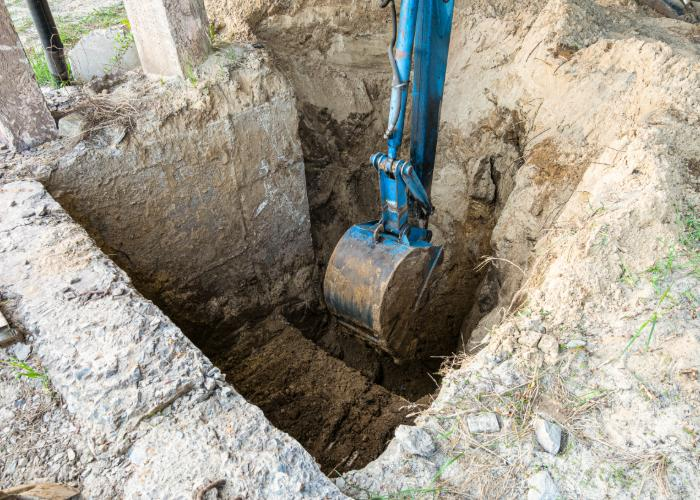
The leading factor behind plumbing failures beneath concrete foundations across North, Central, and South Texas is the native soil composition. Large regions of Texas sit atop highly expansive clay soils—often referred to as Blackland Prairie clay or high-plasticity clay.
Clay soil acts like a sponge. During rainy seasons, it absorbs moisture and expands drastically, exerting upward pressure (heave) against the concrete slab. Conversely, during hot summer droughts, the moisture evaporates, causing the soil to shrink and pull away from the foundation perimeter.
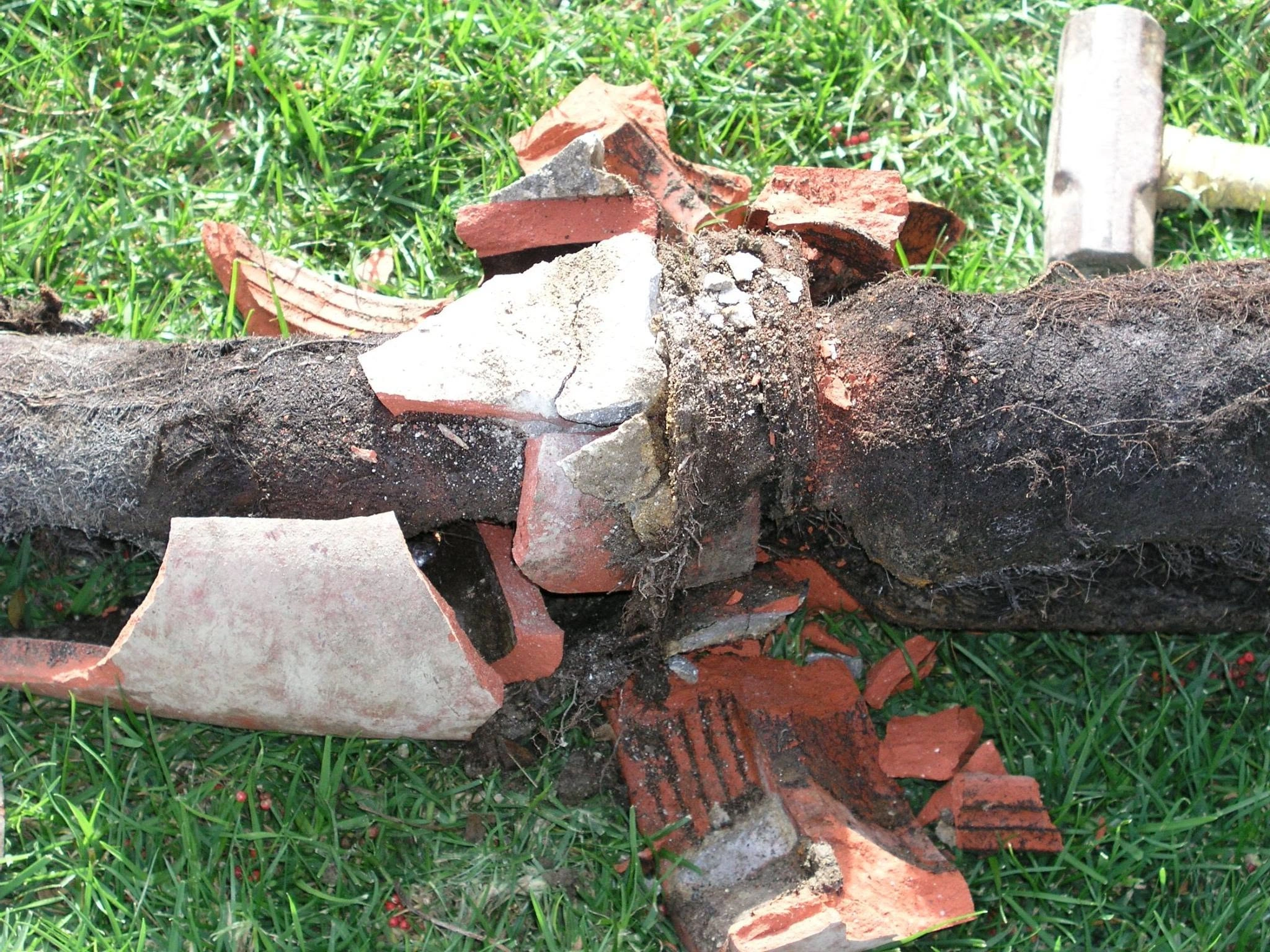
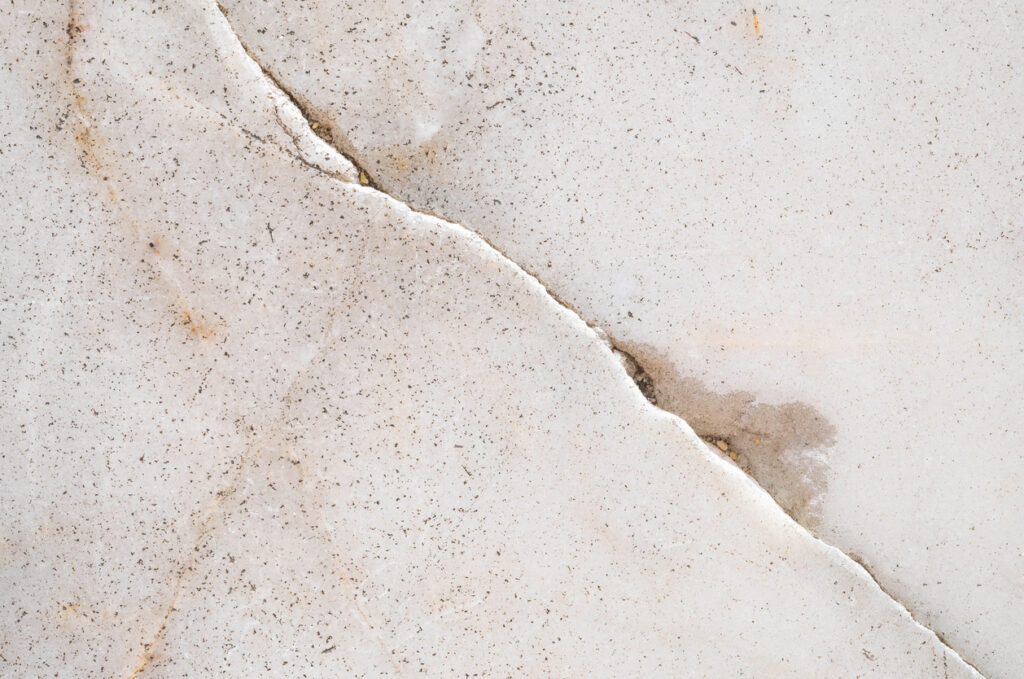
This continuous movement puts severe shear stress on rigid plumbing lines buried underneath. When the foundation shifts even a fraction of an inch, copper pipes can kink, cast iron lines can crack, and PVC joints can separate. The Texas A&M AgriLife Extension offers extensive research detailing how regional clay soils impact residential structural integrity and subsurface utilities.
The Chemical Impact: Hard Water and Pipe Corrosion
Beyond soil mechanics, chemical reactions inside your pipes play a massive role when examining what causes slab leaks in texas.
Texas water supplies frequently contain high concentrations of dissolved minerals like calcium and magnesium, commonly classified as hard water. Over years of continuous use, hard water creates scale deposits inside supply lines while altering internal water chemistry.
Pinhole Leaks in Copper Plumbing
Many Texas homes built between 1970 and 2005 utilized copper piping underneath the slab foundation. While copper is durable, it is vulnerable to localized galvanic corrosion and electrolysis when exposed to hard water with high pH values or stray electrical currents. Over time, tiny holes known as “pinhole leaks” form along the pipe wall. Though small, these leaks spray high-pressure water continuously into the surrounding soil, undermining your foundation support.
Galvanized and Cast Iron Wear
In older properties, sewer lines underneath the slab were constructed from cast iron or galvanized steel. Hydrogen sulfide gas inside drain pipes reacts with moisture to form sulfuric acid, which corrodes the top inner wall of cast iron lines over 30 to 50 years. Eventually, the pipe collapses, leading to severe structural drainage issues.
Thermal Expansion and Mechanical Friction
Hot water supply lines undergo physical expansion every time a hot tap or dishwasher runs. As heated water flows through under-slab copper or PEX lines, the metal or polymer expands lengthwise. When the water cools, the material contracts.
If the original builders did not install adequate protective sleeving around the pipes where they pass through concrete or gravel beds, this movement creates friction:
- Concrete Contact: The outer wall of the pipe repeatedly rubs against rough concrete or aggregate rock.
- Wear Points: Over thousands of heating and cooling cycles, thin spots rub through completely, producing a steady leak under the house.
- Hot Spots on Floors: Homeowners often notice warm patches on hardwood, tile, or carpet before seeing visible water intrusion.
Warning Signs of a Subsurface Plumbing Leak
Detecting sub-slab water leaks early minimizes foundation repair expenses and prevents indoor water damage. Homeowners should look for these key indicators:
- Unexplained Water Bill Spikes: A sudden jump in monthly consumption without an increase in household usage often indicates a pressurized supply line leak.
- Constant Water Heater Activity: If your water heater runs continuously or struggles to maintain warm temperatures, a hot water slab leak may be active.
- Sounds of Running Water: Hearing running water near toilets or sinks when no fixtures are turned on points to concealed piping leaks.
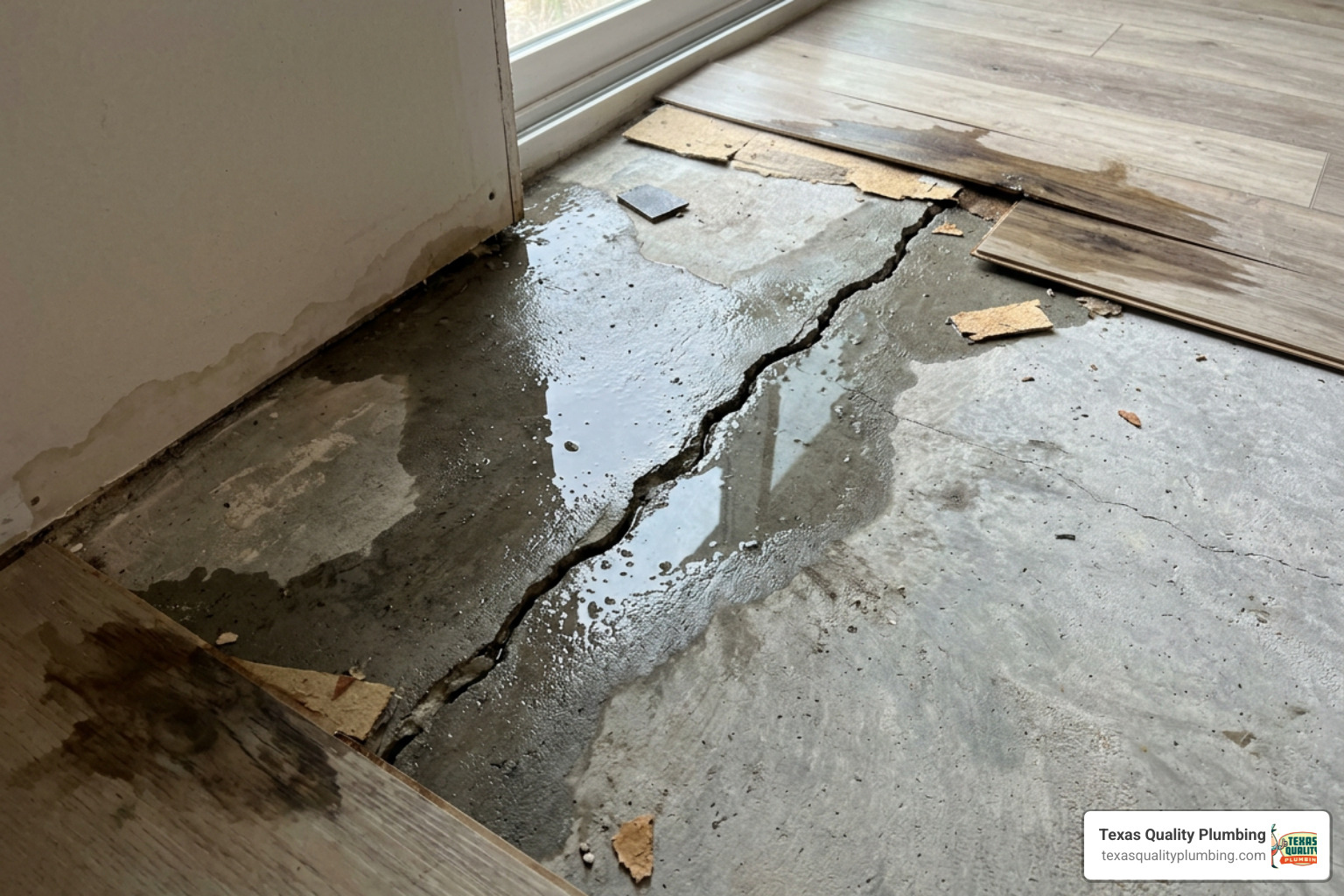
- Damp Flooring or Mold Growth: Moisture wicking up through concrete slabs can ruin hardwood flooring, warp laminate, or create mildew odors along baseboards.
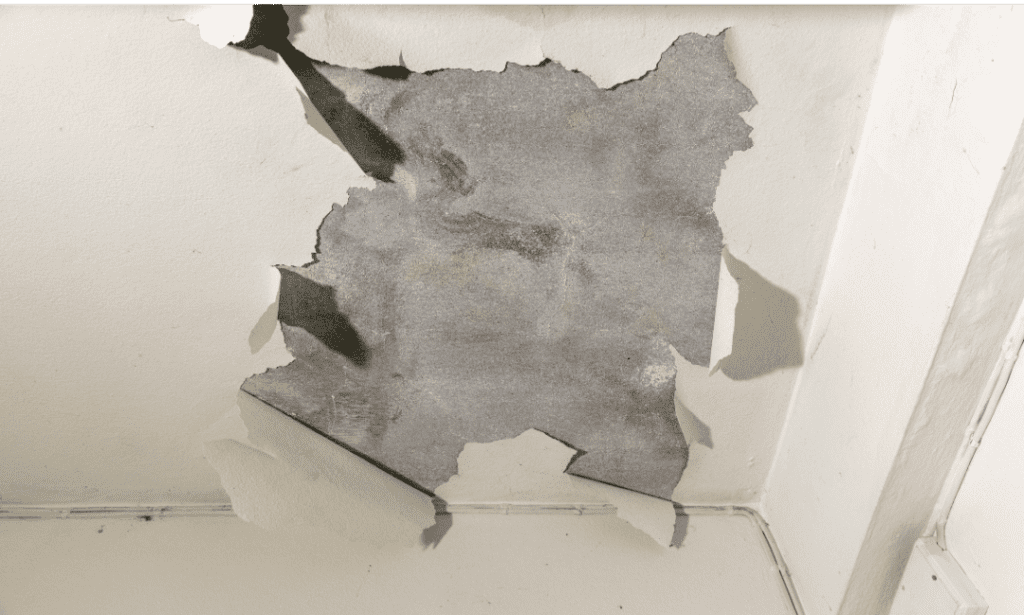
- Cracks in Walls or Foundation: Unexplained cracks in interior sheetrock, door frames sticking, or exterior brick fractures often signal localized soil saturation causing foundation settlement.
Modern Diagnostics: How Specialized Inspections Solve the Problem
When analyzing what causes slab leaks in texas, identifying the precise location of the failure is critical to avoiding destructive floor demolition.
Rather than breaking up concrete slabs blindly, advanced inspection companies utilize non-invasive tools to pinpoint leaks accurately. Diagnostic technology deployed by video inspection professionals at Sewer TV includes:
- High-Definition Sewer Camera Inspections: Self-leveling fiber-optic cameras are inserted directly into drain laterals to inspect cast iron and PVC lines for cracks, root intrusion, or belly dips.
- Sonde & Radio Line Locating: Transmitters mounted on camera heads broadcast frequencies to above-ground receivers, marking the exact depth and location of underground pipe damage.
- Acoustic Leak Detection: Sensitive ground microphones amplify the sound of pressurized water escaping pipes beneath concrete, pinpointing supply line ruptures to within inches.
- Static Pressure Testing: Plumbing systems are isolated and pressurized to verify whether water loss is occurring on the supply side or the DWV (drain, waste, vent) side.